Random Country Generator 🌎

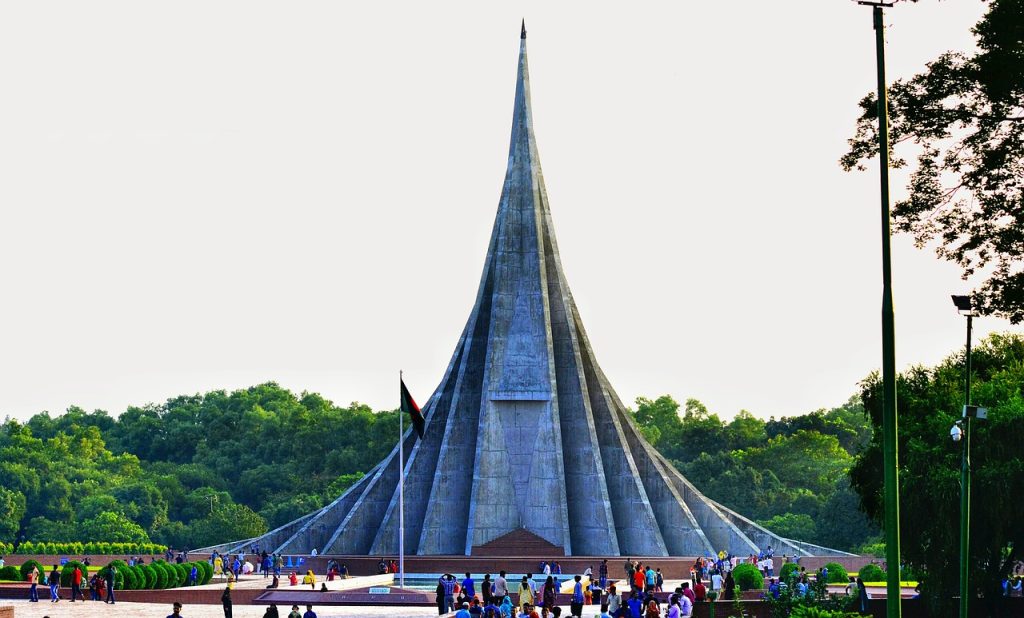
Bangladesh
🏙️ Capital city:
Dhaka
📈 Country population:
164.7 million, ranking 8th globally.
🗺️ Country area:
147,570 km²
Core Facts / Infobox
Present this as a clean two-column table containing accurate and verified national facts. Include only fields with real data.
| Official Name | People’s Republic of Bangladesh |
| Common Name | Bangladesh |
| ISO Codes | BD, BGD, 050 |
| Internet TLD | .bd |
| Calling Code | +880 |
| Capital City | Dhaka |
| Largest City | Dhaka |
| Coordinates | 24° N, 90° E |
| Time Zone | UTC+6 (Bangladesh Standard Time) |
| Population (2025 est.) | ~173 million |
| Area | 147,570 km² |
| Population Density | ~1,200+ per km² |
| Languages | Bengali (Bangla, official), English (widely used) |
| Currency | Bangladeshi Taka (BDT) |
| Driving Side | Left |
| GDP (Nominal) | ~USD 460 billion |
| GDP (PPP) | ~USD 1.3 trillion |
| GDP Per Capita | ~USD 2,500 |
| GDP Growth | ~5.7% |
| HDI | 0.661 (Medium) |
| Literacy Rate | ~75% |
| Life Expectancy | ~73 years |
| Unemployment | ~4.3% |
| Inflation | ~9% |
| Leaders | President and Prime Minister (names not listed due to frequent updates) |
| Continent & Subregion | Asia — South Asia |
| National Day | 26 March (Independence Day) |
| National Sport | Kabaddi |
| National Dish | Biryani (regional variations) |
| National Anthem | Amar Sonar Bangla |
Geography & Environment
- Bangladesh is located in South Asia, bordered by India on three sides, Myanmar to the southeast, and the Bay of Bengal to the south.
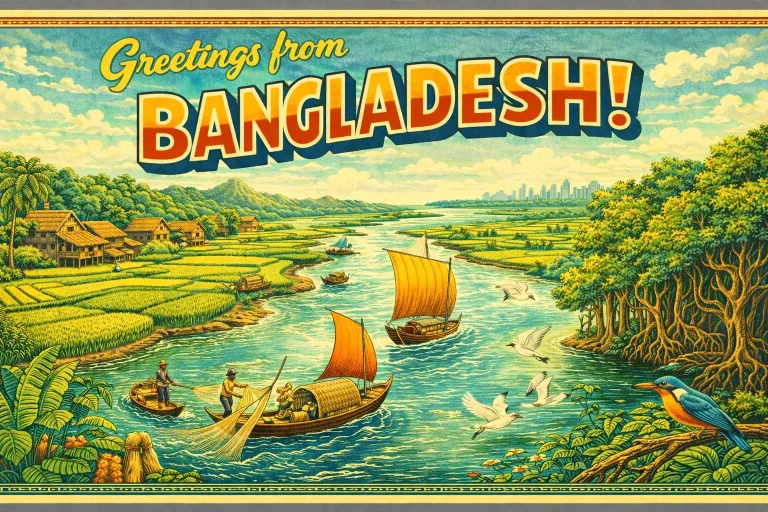
- The country is mostly low-lying delta land formed by the Ganges, Brahmaputra, and Meghna rivers.
- It features fertile plains, mangrove forests, coastal wetlands, and river systems.
- The Sundarbans, the world’s largest mangrove forest, is home to the Royal Bengal Tiger.
- Climate: tropical monsoon with hot summers, heavy rains, and mild winters.
- Best time to visit: November to February.
- Environmental challenges: flooding, cyclones, rising sea levels, riverbank erosion, and pollution.
- Important national parks: Sundarbans National Park, Lawachara National Park, Satchari National Park.
Demographics
- Total population: ~173 million.
- Median age: ~28 years.
- Urban vs rural: ~40% urban, ~60% rural.
- Main ethnic group: Bengali (98%+), with minority groups including Chakma, Marma, Garo, and others.
- Major religion: Islam (majority), followed by Hinduism, Buddhism, and Christianity.
- Literacy rate: ~75%.
- Major cities: Dhaka, Chittagong, Khulna, Rajshahi, Sylhet, Barisal.
History
- Bangladesh’s early history includes ancient Bengal kingdoms and Buddhist, Hindu, and Islamic empires.
- The region became part of British India in the 18th century.
- In 1947, East Bengal became East Pakistan after the partition of India.
- The Bengali independence movement grew due to political and economic disparities.
- Bangladesh declared independence on 26 March 1971 after the Liberation War.
- Post-independence periods saw political transitions, natural disasters, and rapid development.
- Today, Bangladesh is a fast-growing economy with improved social indicators.
Government & Politics
- Government type: Unitary parliamentary republic.
- Executive: Prime Minister (head of government) and President (ceremonial head of state).
- Legislature: Jatiya Sangsad (unicameral parliament).
- Judiciary: independent system headed by the Supreme Court.
- Administrative divisions: 8 divisions, 64 districts.
- Major political issues: governance reforms, climate adaptation, urbanization, and economic expansion.
- Bangladesh is an active member of the UN, SAARC, OIC, BIMSTEC, and Commonwealth.
Economy
- Bangladesh is one of South Asia’s fastest-growing economies.
- Major industries: textiles & garments, agriculture, pharmaceuticals, shipbuilding, leather, and IT services.
- Main exports: ready-made garments, leather goods, seafood, jute products.
- Main imports: machinery, petroleum, chemicals, food commodities.
- Strengths: low-cost labor, strong textile sector, large workforce.
- Weaknesses: infrastructure gaps, reliance on garments, energy challenges.
- Economic sectors: Services (~52%), Industry (~29%), Agriculture (~14%).
- Remittances play a major role in economic stability.
Culture & Society
- Bangladesh has a rich Bengali cultural heritage rooted in literature, music, and festivals.
- Important cultural events: Pohela Boishakh (Bengali New Year), Durga Puja, Eid festivals, Language Movement Day.
- Traditional dress: Saree, Salwar Kameez, Panjabi, and Lungi.
- Arts include classical music, Baul folk music, poetry, drama, and handicrafts.
- Bengali is the national language and a major part of the cultural identity.
Food & Cuisine
- National dish: Biryani (popular in Dhaka and Chittagong styles).
- Iconic dishes: Hilsa Fish Curry, Panta Bhat, Kacchi Biryani, Dal, Bhuna Khichuri.
- Popular street foods: Fuchka (Pani Puri), Chotpoti, Jhalmuri, Haleem.
- Beverages: Tea, Lassi, sugarcane juice, coconut water.
- Cuisine is rice-based with strong fish, lentils, and spice traditions.
Education & Institutions
- Bangladesh has a large and improving education sector.
- Medium of instruction: Bengali; English widely taught.
- Literacy rate: ~75%.
- Top universities: University of Dhaka, BUET, North South University, Chittagong University.
- Strong fields: engineering, medicine, agriculture, textiles, IT.
Tourism
- Top destinations: Cox’s Bazar (world’s longest natural beach), Sundarbans, Dhaka, Sylhet tea gardens, Bandarban.
- UNESCO World Heritage Sites: Sundarbans, Sixty Dome Mosque, Ruins of the Buddhist Vihara at Paharpur.
- Natural attractions: hills of Chittagong, rivers, beaches, mangrove forests.
- Historical landmarks: Lalbagh Fort, Ahsan Manzil, Somapura Mahavihara.
- Adventure tourism: trekking in Bandarban, river cruising, wildlife tours.
- Visa: visa on arrival for many nationalities.
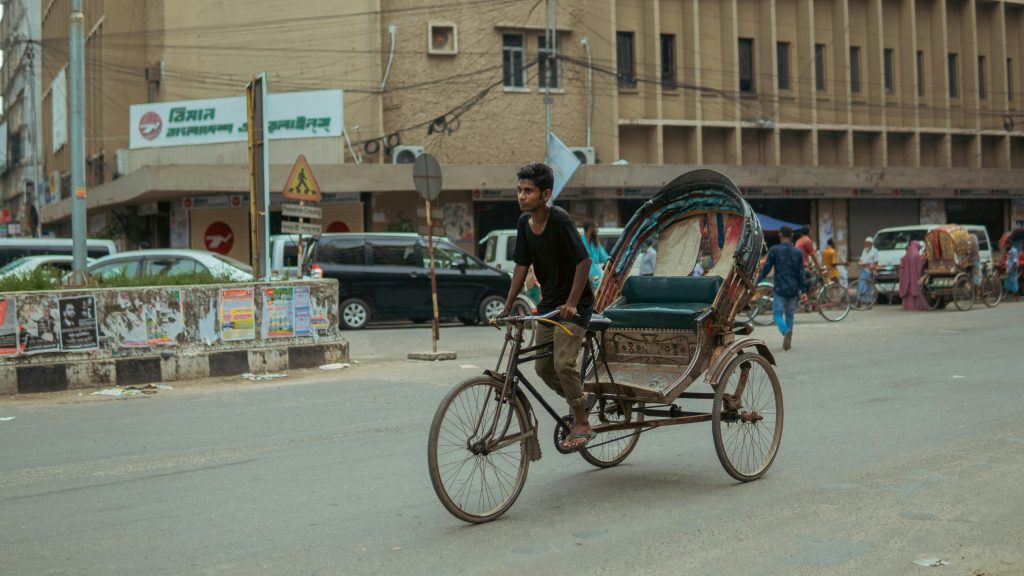
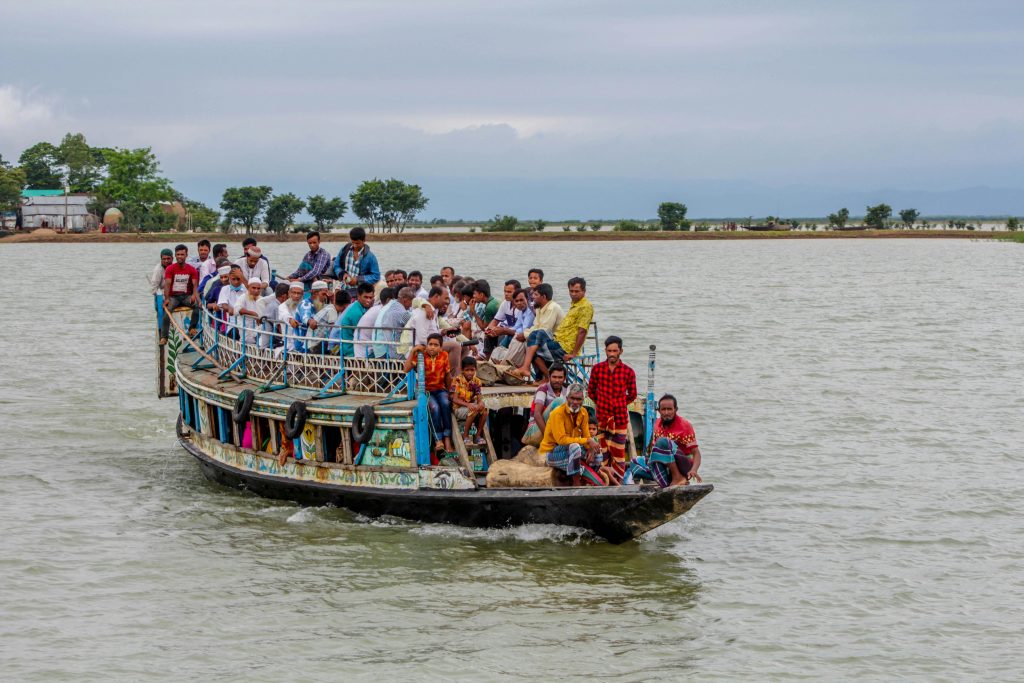
- Transport: widespread bus network, domestic flights, ferries, railways.
Practical Information
- Safety: generally safe but crowded cities require caution.
- Healthcare: good in major cities; limited in rural areas.
- Emergency numbers: Police 999, Fire 199, Ambulance 199.
- Plug type: C & D; Voltage: 220V.
- Internet: widely available; 4G coverage in most regions.
- Best time to visit: November–February.
- Budget: very affordable for travelers.
Sports, Entertainment & Notable People
- National sport: Kabaddi; most popular sport: Cricket.
- Famous athletes: Shakib Al Hasan, Tamim Iqbal, Mashrafe Mortaza.
- Notable writers: Rabindranath Tagore, Kazi Nazrul Islam.
- Famous musicians: Lalon Shah, Runa Laila, Ayub Bachchu.
- Actors: Shabana, Salman Shah, Jaya Ahsan.
- Nobel Prize winners: Muhammad Yunus (Peace Prize).
Neighboring Countries of Bangladesh
Bangladesh shares land borders with the following countries:
Famous For
- Royal Bengal Tiger and the Sundarbans.
- Cox’s Bazar — world’s longest sea beach.
- Bengali culture and literature.
- Rivers and lush greenery.
- Ready-made garments industry.
- Biryani and rich cuisine.
- Tea plantations of Sylhet.
- Historic mosques and temples.
Sources
- World Bank
- United Nations (UN Data)
- IMF
- CIA World Factbook
- Bangladesh Bureau of Statistics
- Official Government Portals