Random Country Generator 🌎
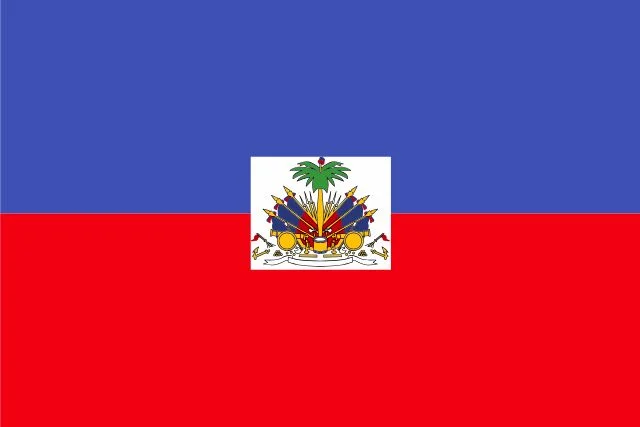
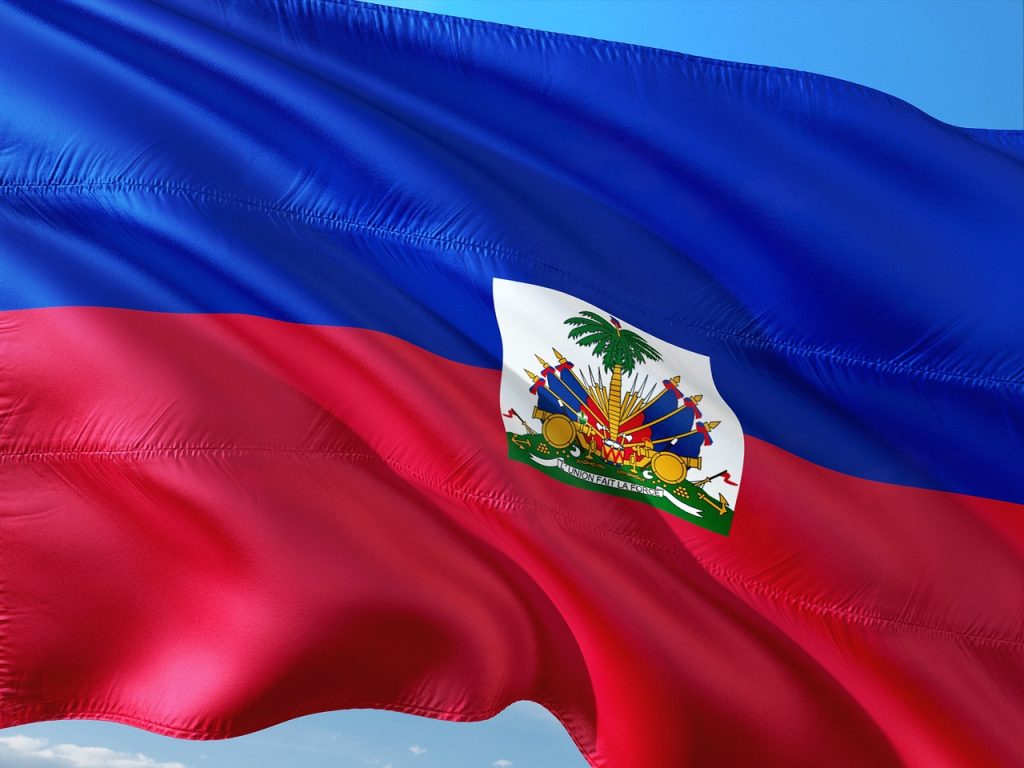
Haiti
🏙️ Capital city:
Port-au-Prince
📈 Country population:
11.7 million
🗺️ Country area:
22,750 km²
Core Facts / Infobox
Present this as a clean two-column table containing accurate and verified national facts. Include only fields with real data.
| Official Name | Republic of Haiti |
| Common Name | Haiti |
| ISO Codes | HT, HTI, 332 |
| Internet TLD | .ht |
| Calling Code | +509 |
| Capital City | Port-au-Prince |
| Largest City | Port-au-Prince |
| Coordinates | 18.5° N, 72.3° W |
| Time Zone | UTC−5 |
| Population (2025 est.) | ~11.7 million |
| Area | 27,750 km² |
| Population Density | ~420 per km² |
| Languages | Haitian Creole, French |
| Currency | Haitian Gourde (HTG) |
| Driving Side | Right |
| GDP (Nominal) | ~USD 14 billion |
| GDP (PPP) | ~USD 33 billion |
| GDP Per Capita | ~USD 1,200 (PPP ~3,000) |
| HDI | 0.535 (Low) |
| Literacy Rate | ~62% |
| Life Expectancy | ~64 years |
| Unemployment | ~14% (estimated) |
| Inflation | High (often >40%) |
| Leaders | President (Vacant since 2021); Prime Minister leads government |
| Continent & Subregion | North America — Caribbean |
| National Day | January 1 (Independence Day) |
| National Sport | Football (Soccer) |
| National Dish | Griot (fried pork) |
| National Anthem | La Dessalinienne |
Geography & Environment
- Located on the western side of the island of Hispaniola, sharing a border with the Dominican Republic.
- Coastlines along the Caribbean Sea and Atlantic Ocean.
- Geography includes mountains, valleys, coastal plains, and offshore islands.
- Climate: tropical with rainy and dry seasons; prone to hurricanes.
- Best time to visit: December–April (dry season).
- Important national parks: Macaya National Park, La Visite National Park.
- Biodiversity includes orchids, hummingbirds, frogs, and unique island wildlife.
- Environmental challenges: deforestation, earthquakes, hurricanes, soil erosion.
Demographics
- Population ~11.7 million.
- Median age ~24 years.
- Ethnic groups: Predominantly Afro-Haitian; small mixed-race and other minorities.
- Religions: Roman Catholic, Protestant, Vodou (widely practiced), and other Christian denominations.
- Urban population: ~60%.
- Major cities: Port-au-Prince, Cap-Haïtien, Gonaïves, Les Cayes.
History
- Originally inhabited by the Taíno people.
- Colonized by Spain and later France.
- Site of the only successful slave revolution in history.
- Became the first Black republic and the second independent nation in the Americas on January 1, 1804.
- Key revolutionary figure: Jean-Jacques Dessalines.
- 20th century saw U.S. occupation (1915–1934) and political instability.
- Recent history includes the 2010 earthquake, political unrest, and economic challenges.
Government & Politics
- Semi-presidential republic, currently under transitional governance.
- President vacant; Prime Minister serving as acting head of government.
- Legislature: Bicameral (Senate and Chamber of Deputies) — often inactive due to political crises.
- Judiciary: Supreme Court of Haiti.
- Divided into 10 departments.
- Key issues: instability, corruption, security concerns, rebuilding efforts.
Economy
- One of the poorest economies in the Western Hemisphere.
- Major industries: agriculture, textiles, manufacturing, tourism (limited), remittances.
- Main exports: apparel, cocoa, mangoes, essential oils (including vetiver).
- Main imports: food, fuel, machinery, manufactured goods.
- Strengths: young workforce, agricultural potential, strong diaspora support.
- Weaknesses: political instability, poor infrastructure, natural disasters.
- GDP sectors: Services (~57%), Industry (~19%), Agriculture (~24%).
Culture & Society
- Deeply rooted in African, French, Caribbean, and indigenous influences.
- Known for vibrant art, music, storytelling, and Vodou traditions.
- Key festivals: Carnival, Rara, Independence Day feasts.
- Traditional dress includes bright, colorful garments influenced by African heritage.
- Music styles: kompa, rara, mizik rasin.
- Languages: Haitian Creole (widely spoken), French (official and administrative).
Food & Cuisine
- National dish: Griot — marinated and fried pork, often served with pikliz.
- Other iconic dishes: Tasso, Legim, Diri ak Pwa (rice and beans), Soup Joumou.
- Street foods: patties, fritay, tablet (peanut brittle).
- Beverages: rum, kremas, coffee, fruit juices.
Education & Institutions
- Medium of instruction: French and Haitian Creole.
- Literacy rate: ~62%.
- Major institutions: University of Haiti, Quisqueya University.
- Challenges include limited resources and lack of access in rural areas.
Tourism
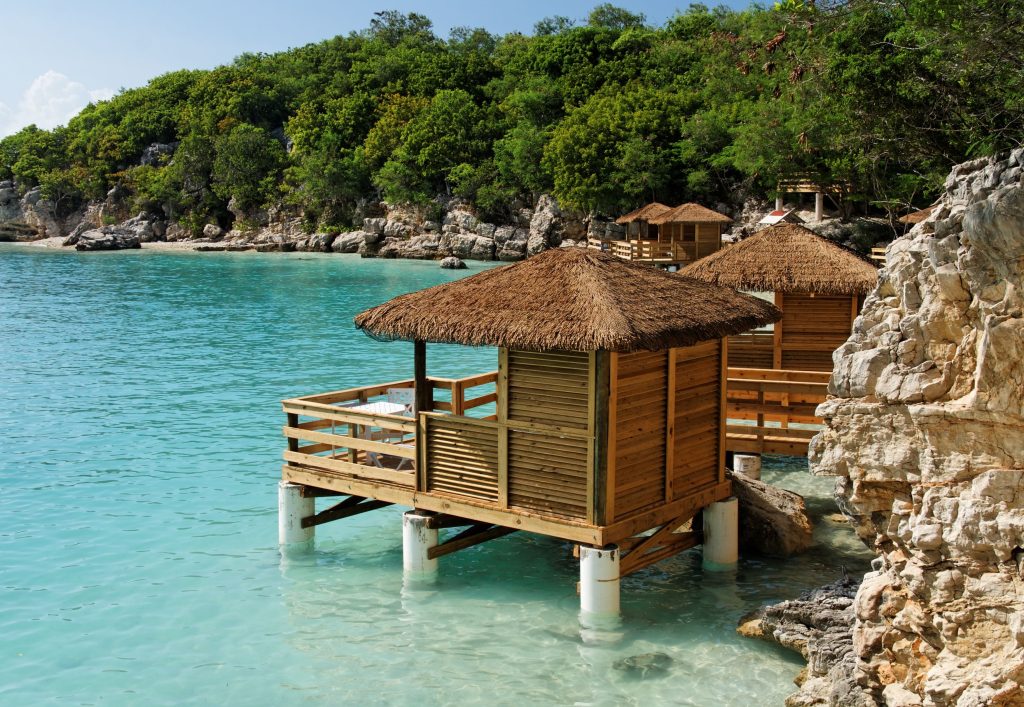
- Top destinations: Labadee, Jacmel, Cap-Haïtien, Citadelle Laferrière.
- UNESCO sites: National History Park (Citadelle, Sans-Souci, Ramiers).
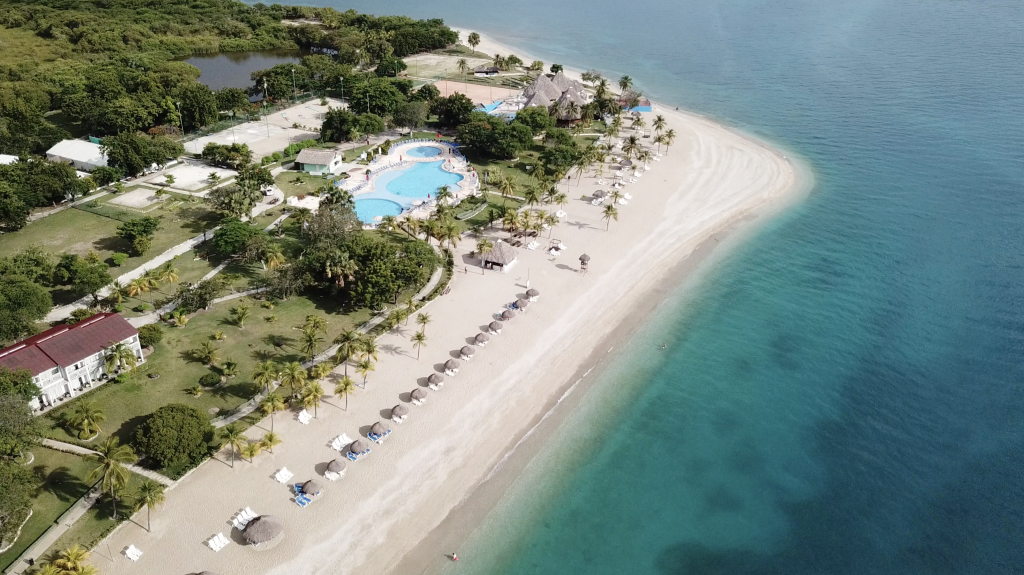
- Natural attractions: beaches, waterfalls, mountains.
- Adventure tourism: hiking, cultural tours, coastal activities.
- Visa: many nationalities enter visa-free; others require simple entry permits.
- Transportation: buses, private taxis, limited domestic flights.
Practical Information
- Safety concerns exist due to political unrest; caution advised.
- Healthcare: basic services; private clinics available.
- Emergency number: 114 (ambulance), 122 (fire), 116 (police).
- Plug type: A/B; Voltage: 110V.
- Internet: available but inconsistent in rural areas.
- Best time to visit: December–April.
- Budget: generally affordable; higher-end hotels available in tourist zones.
Sports, Entertainment & Notable People
- Popular sports: football, basketball, boxing.
- Famous artists: Jean-Michel Basquiat (of Haitian descent), Hector Hyppolite.
- Writers: Edwidge Danticat, Jacques Roumain.
- Musicians: Wyclef Jean, Boukman Eksperyans.
Neighboring Countries of Dominican Republic
The Dominican Republic shares land borders with the following country:
- 360 km with Haiti
Famous For
- Rich Vodou traditions.
- Carnival and Rara celebrations.
- Citadelle Laferrière fortress.
- Vibrant art and music.
- Unique Creole cuisine.
- First independent Black republic.
Sources
- World Bank
- United Nations (UN Data)
- IMF
- CIA World Factbook
- Haiti National Statistics (IHSI)
- Government of Haiti