Random Country Generator 🌎
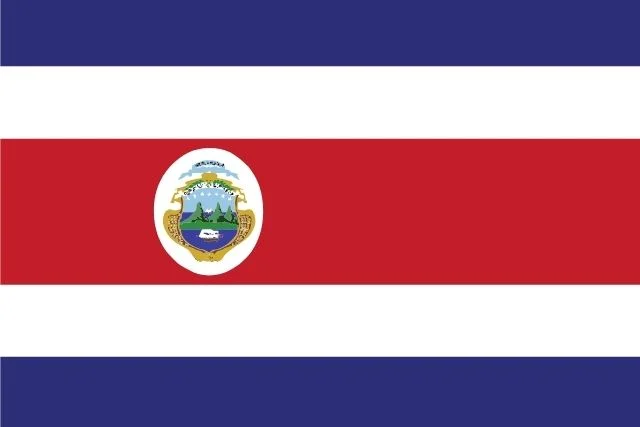
Costa Rica
🏙️ Capital city:
San José
📈 Country population:
5.3 million
🗺️ Country area:
51,100 km²
Core Facts / Infobox
Present this as a clean two-column table containing accurate and verified national facts. Include only fields with real data.
| Official Name | Republic of Costa Rica |
| Common Name | Costa Rica |
| ISO Codes | CR, CRI, 188 |
| Internet TLD | .cr |
| Calling Code | +506 |
| Capital City | San José |
| Largest City | San José |
| Coordinates | 9.9° N, 84.1° W |
| Time Zone | UTC−6 |
| Population (2025 est.) | ~5.3 million |
| Area | 51,100 km² |
| Population Density | ~104 per km² |
| Languages | Spanish (official); Indigenous languages in small communities |
| Currency | Costa Rican Colón (CRC) |
| Driving Side | Right |
| GDP (Nominal) | ~USD 80 billion |
| GDP (PPP) | ~USD 125 billion |
| GDP Per Capita | ~USD 16,000 (PPP ~25,000) |
| HDI | 0.809 (Very High) |
| Literacy Rate | ~97% |
| Life Expectancy | ~80 years |
| Unemployment | ~11% |
| Inflation | ~2–3% |
| Leaders | President; Vice President |
| Continent & Subregion | North America — Central America |
| National Day | September 15 (Independence Day) |
| National Sport | Football (Soccer) |
| National Dish | Gallo Pinto |
| National Anthem | Noble patria, tu hermosa bandera |
Geography & Environment
- Located in Central America, bordered by Nicaragua to the north and Panama to the south.
- Has coastlines on both the Pacific Ocean and Caribbean Sea.
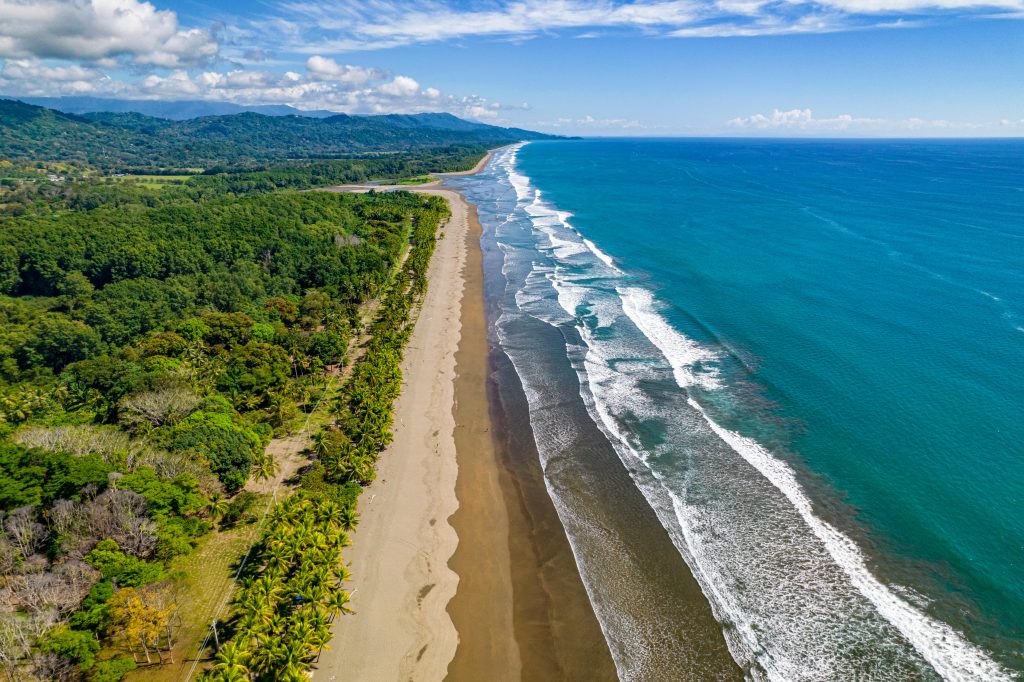
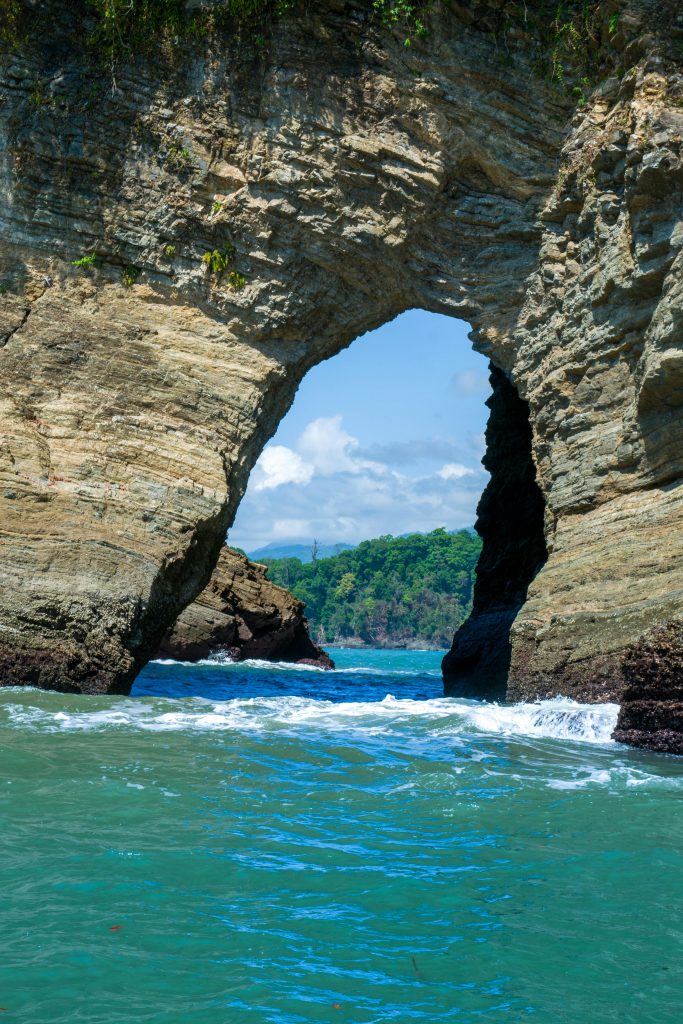
- Known for volcanoes, rainforests, cloud forests, mountains, and beautiful beaches.
- Climate: tropical with microclimates; wet and dry seasons.
- Best time to visit: December–April (dry season).
- National parks cover 25% of the country, including Corcovado, Tortuguero, Arenal Volcano, and Monteverde Cloud Forest.
- One of the world’s most biodiverse countries with sloths, toucans, jaguars, sea turtles, and hundreds of bird species.
- Environmental challenges include deforestation, coastal erosion, and climate change impacts.
Demographics
- Population ~5.3 million.
- Median age ~34 years.
- Ethnic groups: predominantly White and Mestizo; Afro-Caribbean, Indigenous, and Asian minorities.
- Religion: mainly Roman Catholic, with Protestant minorities.
- Urban population ~80%.
- Major cities: San José, Alajuela, Cartago, Heredia, Liberia.
History
- Originally inhabited by Indigenous groups including the Chorotega and Bribri.
- Colonized by Spain in the 16th century.
- Gained independence from Spain on September 15, 1821.
- Joined and later left the Federal Republic of Central America.
- Abolished its military in 1948, becoming a peaceful democratic nation.
- Known for stability, social progress, and environmental leadership.
Government & Politics
- Government type: Democratic presidential republic.
- Executive: President.
- Legislature: unicameral Legislative Assembly.
- Judiciary: Supreme Court of Justice.
- Divided into 7 provinces.
- One of the most politically stable nations in Latin America.
Economy
- Diversified economy focused on services, tourism, agriculture, and technology.
- Major industries: ecotourism, medical devices, technology services, agriculture, manufacturing.
- Main exports: medical instruments, bananas, pineapples, coffee, sugar, electronic components.
- Main imports: machinery, petroleum, vehicles, chemicals.
- Strengths: political stability, environmental policies, educated workforce.
- Weaknesses: high public debt, cost of living increases.
- GDP sectors: Services (~68%), Industry (~21%), Agriculture (~11%).
Culture & Society
- Known for peaceful culture and the philosophy of “Pura Vida” (pure life).
- Festivals include Día de la Independencia, Palmares Festival, and Carnaval de Limón.
- Traditional dress includes colorful embroidered outfits used in cultural celebrations.
- Music styles: cumbia, salsa, marimba, reggae (in Caribbean regions).
- Language: Spanish; English spoken in tourism areas.
Food & Cuisine
- National dish: Gallo Pinto — rice and beans cooked with spices.
- Other iconic dishes: Casado, Olla de Carne, Chifrijo, Arroz con Pollo.
- Street foods: empanadas, patacones, chorreadas.
- Beverages: coffee, fresco de cas, horchata, sugarcane drinks.
Education & Institutions
- Medium of instruction: Spanish.
- Literacy rate: ~97%.
- Leading universities: University of Costa Rica (UCR), National University, Tecnológico de Costa Rica.
- Strong academic sectors include medicine, environmental science, and engineering.
Tourism
- Top destinations: Arenal Volcano, Monteverde Cloud Forest, Manuel Antonio, Tortuguero, Guanacaste beaches.
- UNESCO sites: Area de Conservación Guanacaste, Precolumbian Chiefdom Settlements with Stone Spheres.
- Natural attractions: volcanoes, rainforests, wildlife reserves, waterfalls, beaches.
- Adventure tourism: ziplining, surfing, white-water rafting, canyoning, wildlife tours.
- Visa: visa-free for many nationalities; easy entry process.
- Transportation: buses, rental cars, domestic flights, ferries.
Practical Information
- One of the safest countries in Central America.
- Healthcare: excellent private hospitals; universal public system.
- Emergency number: 911.
- Plug type: A/B; Voltage: 120V.
- Internet: widely available; high speeds in cities.
- Best time to visit: December–April.
- Budget: mid-range to high depending on region; eco-lodges widely available.
Sports, Entertainment & Notable People
- National sport: football.
- Popular sports: football, surfing, cycling.
- Notable athletes: Keylor Navas (football), Claudia Poll (Olympic swimmer).
- Writers: Carlos Luis Fallas, Joaquín Gutiérrez.
- Musicians: Editus, Debi Nova.
Neighboring Countries of Costa Rica
Costa Rica shares land borders with the following countries:
Famous For
- Pura Vida lifestyle.
- World-famous biodiversity.
- Rainforests and cloud forests.
- Eco-tourism and sustainability.
- Beautiful beaches on two coasts.
- No standing army since 1948.
Sources
- World Bank
- United Nations (UN Data)
- IMF
- CIA World Factbook
- Costa Rica National Institute of Statistics and Census
- Government of Costa Rica