Random Country Generator 🌎

Cuba
🏙️ Capital city:
Havana
📈 Country population:
11 million
🗺️ Country area:
109,884 km²
Core Facts / Infobox
Present this as a clean two-column table containing accurate and verified national facts. Include only fields with real data.
| Official Name | Republic of Cuba |
| Common Name | Cuba |
| ISO Codes | CU, CUB, 192 |
| Internet TLD | .cu |
| Calling Code | +53 |
| Capital City | Havana |
| Largest City | Havana |
| Coordinates | 23.1° N, 82.4° W |
| Time Zone | UTC−5 (UTC−4 in summer) |
| Population (2025 est.) | ~11 million |
| Area | 109,884 km² |
| Population Density | ~100 per km² |
| Languages | Spanish |
| Currency | Cuban Peso (CUP) |
| Driving Side | Right |
| GDP (Nominal) | ~USD 110 billion (est.) |
| GDP (PPP) | ~USD 190 billion (est.) |
| GDP Per Capita | ~USD 10,000 (PPP est.) |
| HDI | 0.764 (High) |
| Literacy Rate | ~99% |
| Life Expectancy | ~78 years |
| Unemployment | ~3% |
| Inflation | Varies; high since 2021 reforms |
| Leaders | President; Prime Minister |
| Continent & Subregion | North America — Caribbean |
| National Day | January 1 (Triumph of the Revolution) |
| National Sport | Baseball |
| National Dish | Ropa Vieja |
| National Anthem | La Bayamesa |
Geography & Environment
- Cuba is the largest island in the Caribbean, located between the Gulf of Mexico and the Atlantic Ocean.
- Neighboring nations include the United States (north), Mexico (west), Haiti (east), and Jamaica (south).
- Geographical features include the Sierra Maestra mountains, Viñales Valley, Zapata Swamp, and extensive coastline.
- Climate: tropical, with dry and rainy seasons.
- Best time to visit: November–April.
- National parks: Alejandro de Humboldt National Park, Viñales National Park, Gran Parque Nacional Sierra Maestra.
- Biodiversity: Cuban crocodile, hummingbirds, coral reefs, endemic flora and fauna.
- Environmental challenges: hurricanes, coastal erosion, drought, deforestation.
Demographics
- Population ~11 million.
- Median age ~42 years.
- Ethnic composition: mixed ancestry (majority), white, Afro-Cuban, and smaller Asian communities.
- Religion: largely secular; Catholicism and Afro-Cuban faiths like Santería.
- Urban population: ~77%.
- Major cities: Havana, Santiago de Cuba, Camagüey, Holguín.
History
- Originally inhabited by Taíno peoples.
- Colonized by Spain in the 16th century.
- Gained formal independence from Spain in 1898, following U.S. intervention.
- Cuban Revolution (1953–1959) led by Fidel Castro overthrew Batista’s regime.
- Transformed into a socialist state aligned with the Soviet Union.
- Major events: Bay of Pigs (1961), Cuban Missile Crisis (1962), economic reforms after 1990s.
Government & Politics
- Unitary socialist republic.
- Executive: President and Prime Minister.
- Legislature: National Assembly of People’s Power.
- Judiciary: People’s Supreme Court.
- Cuba is divided into 15 provinces and 1 special municipality (Isla de la Juventud).
- Political landscape dominated by the Communist Party of Cuba.
Economy
- Mixed socialist-controlled economy undergoing gradual reforms.
- Major industries: tourism, sugar, tobacco, nickel mining, biotechnology, healthcare services.
- Main exports: cigars, sugar, medical services, nickel, rum.
- Main imports: fuel, food, machinery, chemicals.
- Strengths: strong medical sector, tourism potential.
- Weaknesses: U.S. embargo, limited foreign investment, energy shortages.
- GDP sectors: Services (~70%), Industry (~23%), Agriculture (~7%).
Culture & Society
- Cuban culture blends Spanish, African, and Caribbean influences.
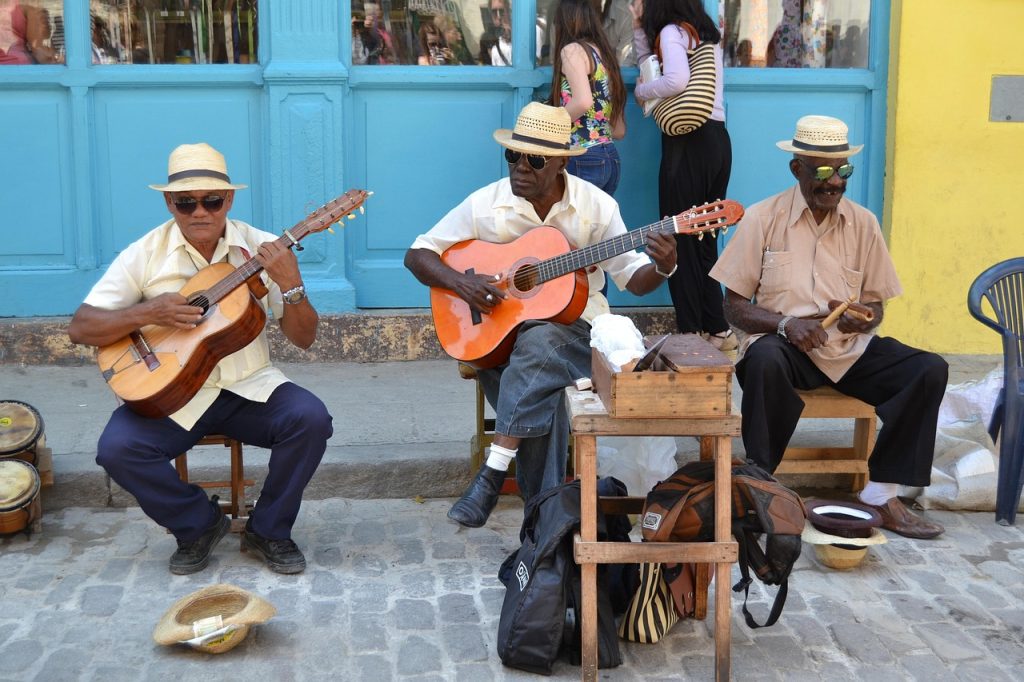
- Famous for music styles like salsa, son cubano, rumba, and mambo.
- Important festivals: Carnival, Havana Jazz Festival, International Ballet Festival.
- Traditional clothing influenced by Afro-Caribbean and Spanish heritage.
- Arts: world-renowned ballet, literature, and fine arts.
- Languages: Spanish; many Afro-Cuban dialectal influences.
Food & Cuisine
- National dish: Ropa Vieja — shredded beef in tomato-based sauce.
- Iconic foods: Moros y Cristianos, lechón asado, tostones, picadillo.
- Street foods: Cuban sandwiches, empanadas, churros.
- Beverages: Cuban coffee, mojito, daiquiri, guarapo.
Education & Institutions
- Free and universal education; high literacy rate of ~99%.
- Medium of instruction: Spanish.
- Top institutions: University of Havana, CUJAE, University of Oriente.
- Strengths: medicine, engineering, sciences.
Tourism
- Top destinations: Havana, Varadero, Trinidad, Santiago de Cuba, Viñales Valley.
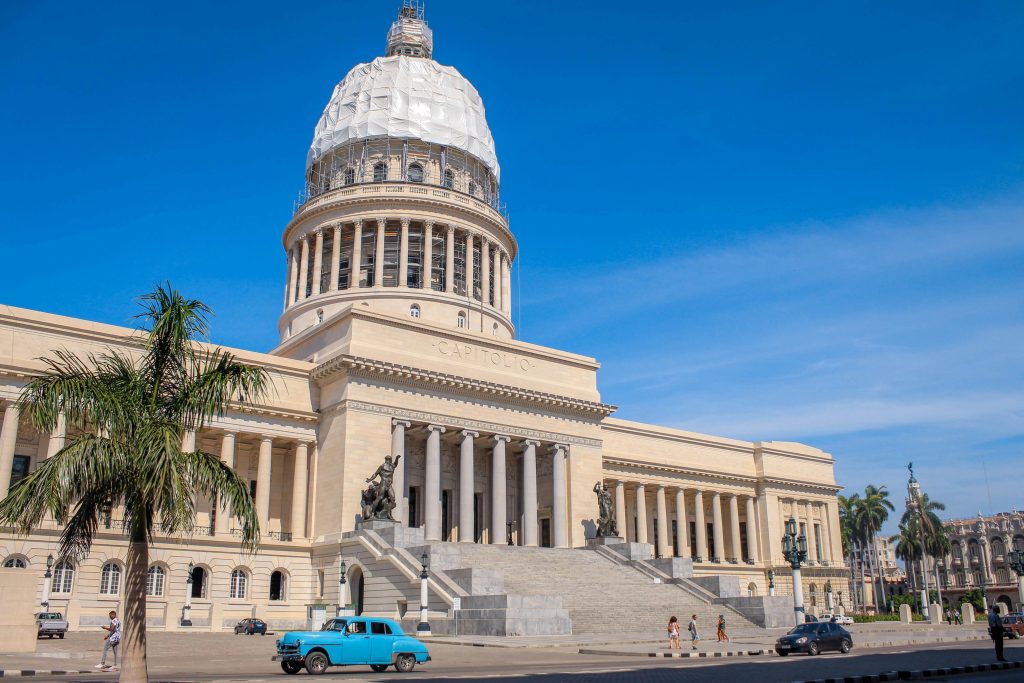
- UNESCO sites: Old Havana, Trinidad, San Pedro de la Roca Castle, Desembarco del Granma National Park.
- Natural attractions: beaches, coral reefs, forests, mountains.
- Adventure tourism: diving, hiking, caving.
- Visa: tourist card required for most nationalities.
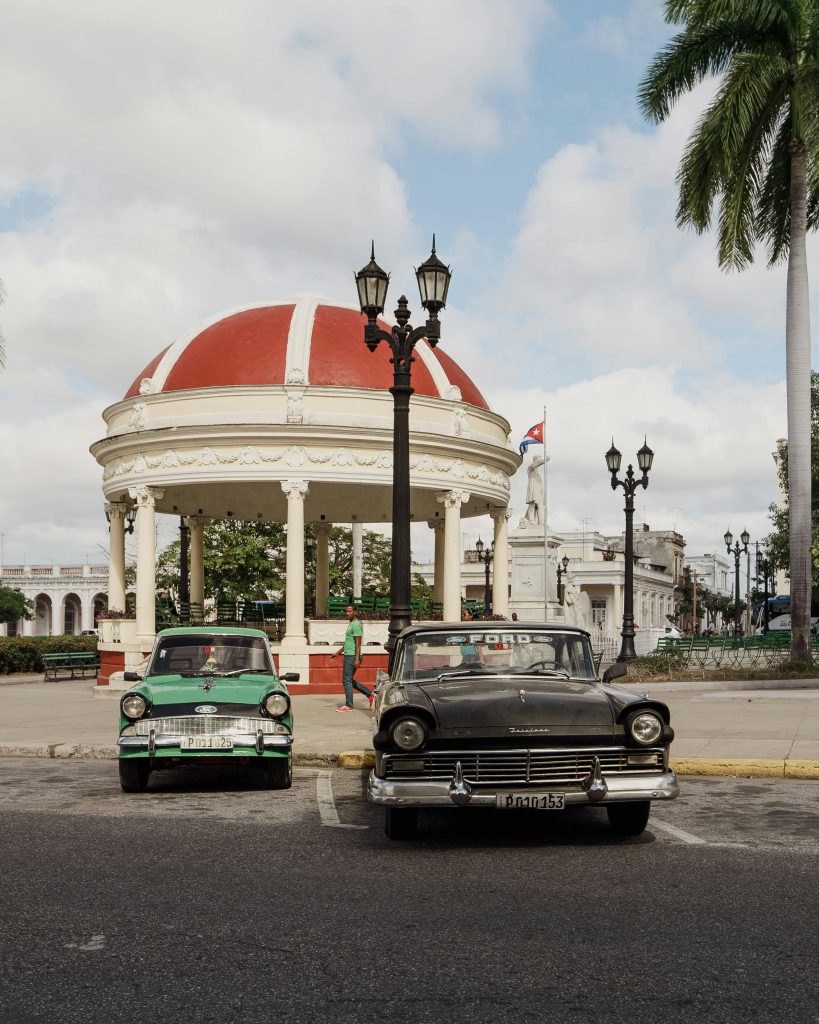
- Transportation: buses, taxis, domestic flights, vintage cars.
Practical Information
- Safety: generally safe; petty theft possible in tourist areas.
- Healthcare: strong public system; popular for medical tourism.
- Emergency number: 106 (police), 104 (medical).
- Plug type: A/B; Voltage: 110V & 220V (varies by location).
- Internet: improving but limited; Wi-Fi hotspots common.
- Best time to visit: November–April.
- Budget: moderate; tourist areas may be expensive.
Sports, Entertainment & Notable People
- National sport: baseball.
- Other popular sports: boxing, athletics, volleyball.
- Famous athletes: Teófilo Stevenson (boxing), Javier Sotomayor (high jump).
- Famous musicians: Celia Cruz, Compay Segundo, Buena Vista Social Club.
- Writers: José Martí, Alejo Carpentier.
Neighboring Countries of Cuba
Cuba does not share any land borders. Its maritime neighbors in the Caribbean include the United States, Mexico, Haiti, Dominican Republic, Jamaica, and Bahamas.
Famous For
- Classic cars and colonial architecture.
- Cuban cigars and rum.
- Salsa and Afro-Cuban music.
- Beaches and tropical resorts.
- Revolutionary history and Che Guevara imagery.
- Strong healthcare and education systems.
Sources
- World Bank
- United Nations (UN Data)
- IMF
- CIA World Factbook
- Oficina Nacional de Estadísticas e Información (ONEI)
- Government of Cuba